Two-Component (2K) Coating Systems — Epoxy, Polyurethane, and Polyaspartic
2 April 2026 · ProPainterTools
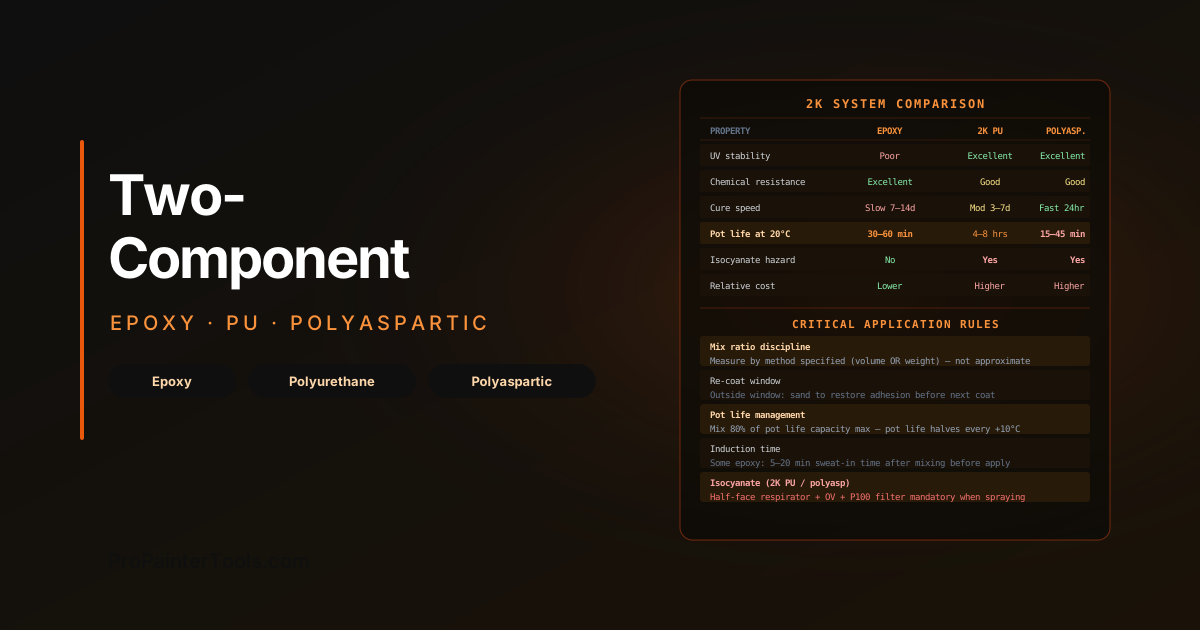
Two-Component (2K) Coating Systems: Epoxy, Polyurethane, and Polyaspartic
Two-component (2K) coatings are the workhorses of high-performance industrial, commercial, and specialty architectural finishing. They deliver chemical resistance, hardness, and service life that single-component products cannot match — but they require a higher level of technical discipline in application. Mixing errors, pot life violations, and re-coat window failures are all irreversible. This guide covers the chemistry of the three main 2K systems, how to work with them correctly, and how to specify the right system for each application.
What Makes a Coating Two-Component?
A two-component coating cures by chemical reaction between two separate components:
- Part A — the resin (epoxy, hydroxyl-functional acrylic, or isocyanate in the case of polyisocyanate)
- Part B — the curing agent or hardener (amine for epoxy, polyisocyanate for polyurethane, amine/polyaspartic ester for polyaspartic)
When mixed, the components react irreversibly. The pot life is the working time before the mixture gels. Once the pot life is exceeded, the material cannot be thinned back — it must be discarded.
Single-component coatings cure by solvent/water evaporation (lacquers, latex) or by moisture crosslinking (single-component moisture-cure polyurethane). They are easier to apply but cannot match the cross-link density and chemical resistance of 2K systems.
The Three Main 2K Systems
1. Two-Component Epoxy
Chemistry: Epoxy resin (bisphenol A or F) cured with amine, polyamide, or amidoamine hardener.
Where used: Floor coatings, steel primer, tank lining, concrete coating, marine primer, industrial topcoat.
Performance characteristics:
- Excellent adhesion to steel, concrete, and primed surfaces
- High hardness and abrasion resistance after full cure
- Excellent chemical resistance (acids, alkalis, solvents — specific resistance varies by formulation)
- UV unstable (bisphenol A/F resins yellow under UV — not for exterior without UV-stable topcoat)
- Cure continues for days to weeks at room temperature — "full cure" is typically 7–14 days
Mix ratios: Typically 2:1 or 3:1 by volume (Part A:Part B). Some products mix 1:1. Always verify by the specific PDS — the ratio is determined by stoichiometry, not convenience. Off-ratio mixing does not simply reduce performance; it produces a film that never fully cures.
Pot life at 20°C: 30–60 minutes typical. At 30°C: 15–25 minutes. At 10°C: 90–180 minutes.
Common failure: Applying at too high an ambient temperature, exhausting pot life mid-job. Always track temperature vs. pot life; do not mix full kits on hot days.
2. Two-Component Polyurethane (2K PU)
Chemistry: Hydroxyl-functional acrylic or polyester resin (Part A) cured with aliphatic or aromatic polyisocyanate hardener (Part B).
Where used: High-performance topcoats on steel, concrete, fibre cement, wood (2K wood finish), and as UV-stable topcoat over epoxy primer. Cabinet and joinery finishing.
Performance characteristics:
- Aliphatic 2K PU: UV-stable, excellent gloss and colour retention — appropriate for exterior and UV-exposed applications. This is the standard for high-performance industrial topcoats.
- Aromatic 2K PU: Not UV-stable (yellows); used for primers and interior applications. Cheaper than aliphatic.
- Very high hardness and scratch resistance after full cure
- Superior gloss retention vs epoxy topcoats
- Excellent chemical resistance, particularly to solvents and mild acids/alkalis
- Isocyanates (Part B) are sensitising agents: Exposure can cause occupational asthma. Full respiratory protection (half-face respirator with organic vapour and P100 filter) is mandatory when spraying. Sensitisation is cumulative — once sensitised, any future exposure — even trace — triggers reactions.
Mix ratios: Commonly 3:1, 4:1, or 5:1 by volume or weight. Always PDS.
Pot life at 20°C: 4–8 hours for brush/roller; 1–2 hours for spray (lower viscosity, thinner film, faster evaporation of carrier).
Re-coat window: 16–24 hours at 20°C (check PDS). Outside the window, the cured surface must be sanded to restore adhesion.
3. Polyaspartic
Chemistry: Aliphatic polyisocyanate (Part B) cured with polyaspartic ester (Part A) — a modified aliphatic amine that reacts much faster than standard amines.
Where used: Garage and residential floor topcoats, UV-stable floor sealers, rapid-turnaround commercial floor coating.
Performance characteristics:
- UV-stable (aliphatic chemistry) — suitable for exterior and light-exposed floors
- Fast cure: light foot traffic in 2–4 hours, vehicle traffic in 12–24 hours
- Excellent abrasion and scratch resistance
- High gloss options available
- Higher cost than epoxy; less chemical resistance than epoxy in severe chemical environments
Pot life: Fast-set polyaspartics have pot life of only 15–30 minutes at 20°C — batch size must be matched to application speed. Slow-set variants extend pot life to 45–90 minutes. Know which you are working with before mixing.
Application note: Polyaspartic is typically applied by roller (3/8" nap, shed-resistant) in residential floor applications. Thin, even coats — the fast cure means lap marks form quickly if the installer is not working consistently and at a controlled pace.
Comparison: 2K System Selection
| Property | Epoxy | 2K Polyurethane (Aliphatic) | Polyaspartic |
|---|---|---|---|
| UV stability | Poor | Excellent | Excellent |
| Hardness / abrasion | High | Very high | Very high |
| Chemical resistance | Excellent | Good–Very good | Good |
| Flexibility | Low–Moderate | Moderate | Moderate |
| Cure speed | Slow (7–14 days full) | Moderate (3–7 days) | Fast (24 hrs serviceable) |
| VOC (solvent-borne) | 200–400 g/L | 300–500 g/L | 50–150 g/L (varies) |
| Waterborne option | Yes — performance compromise | Yes — lower VOC | N/A (inherently lower VOC) |
| Isocyanate hazard | No | Yes (Part B) | Yes (Part B) |
| Cost | Lower | Higher | Higher |
Critical Application Rules for 2K Systems
Mix Ratio Discipline
Measure by the method specified — by volume using calibrated containers, or by weight using a scale. "Approximate" mixing produces uncured or under-cured film. Most manufacturers supply pre-measured kits (the entire Part A is mixed with the entire Part B) — this is the safest approach.
Induction Time
Some epoxy formulations specify an induction time (also called sweat-in time) of 5–20 minutes after mixing, before application. This allows initial reaction to begin, reducing bubbling and improving film formation. If the PDS specifies induction time, observe it.
Pot Life Management
- Know the pot life at the expected ambient temperature before you start.
- Do not mix more material than you can apply within 80% of the pot life — leave a safety margin.
- Never pour mixed material back into a fresh batch — the partially gelled material will accelerate the gel of the entire batch.
- Dispose of pots that have reached pot life — do not attempt to thin or extend.
Re-Coat Window
Every 2K system has a minimum and maximum re-coat window:
- Before minimum: Film is not cured enough to accept additional material without lifting.
- After maximum: The cured film requires mechanical abrasion (sanding) to accept adhesion from the next coat.
Track when each coat was applied and the ambient temperature — temperature affects both the minimum and maximum re-coat times.
Isocyanate Safety
For polyurethane and polyaspartic systems containing isocyanate hardener (Part B):
- Brush/roller application: Nitrile gloves, chemical splash goggles, ensure ventilation.
- Spray application: Full face or half-face respirator with organic vapour cartridges AND P100 filter, disposable tyvek coveralls, and positive air or supplied air for high-exposure environments.
- Do not eat, drink, or touch face during application.
- Isocyanate sensitisation is permanent — there is no treatment that reverses it.
Waterborne 2K Systems
Waterborne 2K systems (primarily 2K waterborne polyurethane for timber and cabinetry) have lower VOC and are increasingly common in CARB-regulated jurisdictions. They perform well for interior wood finishing but have limitations:
- Higher sensitivity to humidity during application (water carrier is slower to evaporate in humid conditions)
- Require higher temperatures for cure vs solvent-borne equivalents
- Generally do not achieve the same hardness as solvent-borne 2K PU at equivalent DFT
For commercial kitchen cabinetry and joinery finishing in California and other CARB-regulated regions, waterborne 2K polyurethane is the practical alternative to conversion varnish. See our VOC regulations guide for limits by category.
For epoxy floor coating specification in detail, see our epoxy floor coatings guide. For industrial steel primer and coating systems, see our industrial metal finishes guide.
ProPainterTools supports commercial job specifications including coating system documentation, product and batch number records, and application condition notes — building the job file for warranty and dispute protection.
Frequently Asked Questions
What happens if I use too much hardener (Part B)? Excess hardener produces a brittle, discoloured film that cures incompletely at the resin level. The film may appear to set but will be chalky, soft in spots, or delaminate. There is no correction other than stripping and reapplication.
Can I thin a 2K coating with water or solvent? Only with the thinner specified by the manufacturer, at the maximum percentage stated in the PDS. Over-thinning reduces film build per coat and can disrupt the mix ratio in practice. For spray, some thinning is normal; for brush/roller, thinning is rarely necessary with correct temperature.
How do I know when 2K epoxy is fully cured? A Shore D hardness test or a solvent rub test (MEK double rub) confirms cure. Practically, rub the surface firmly with a cloth saturated in MEK (methyl ethyl ketone) — a fully cured epoxy resists 100+ double rubs without softening. An under-cured epoxy softens quickly.
Can polyaspartic be applied directly to concrete without epoxy primer? Some polyaspartic systems are designed as direct-to-concrete coatings, but most manufacturers still recommend an epoxy primer for maximum adhesion and porosity sealing, with polyaspartic as the topcoat. Check the system PDS.
