Exterior Architectural Coatings — Acrylic, Elastomeric, and Specialty Systems
21 March 2026 · ProPainterTools
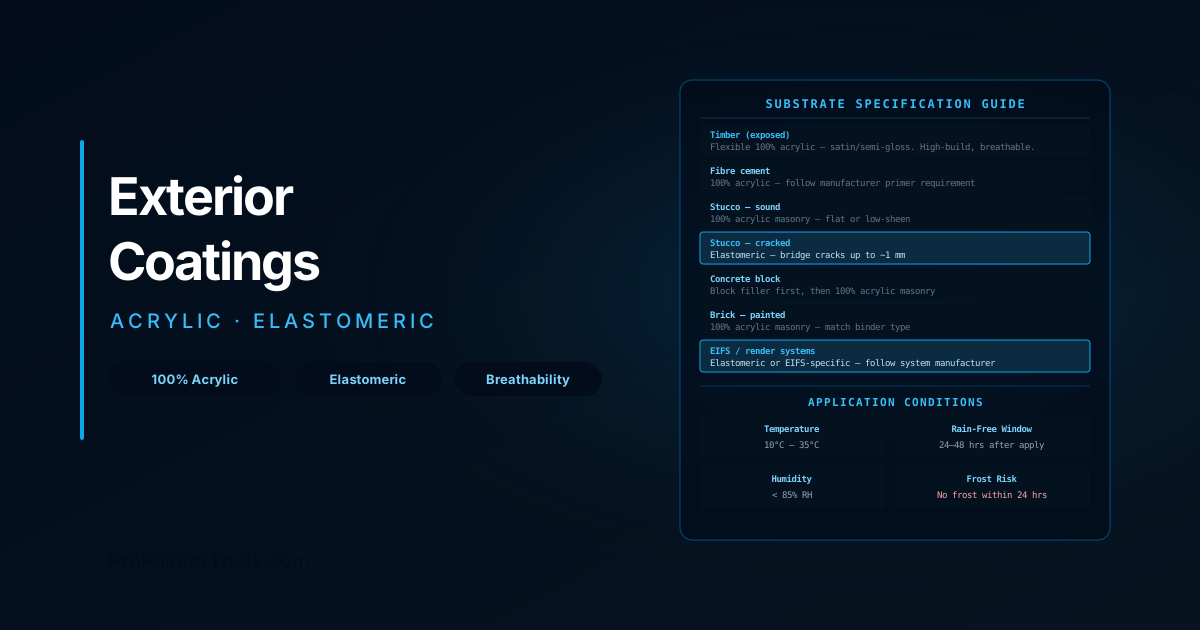
Exterior Architectural Coatings: Acrylic, Elastomeric, and Specialty Systems
The exterior of a building faces a permanent combination of UV radiation, thermal cycling, moisture infiltration, and biological growth — conditions that accelerate every weakness in a coating system. Selecting the right exterior product for a given substrate, exposure, and building type requires understanding how coating chemistry determines performance, not just reading the marketing tier on the can. This guide covers the technical basis of exterior architectural coating specification: acrylic chemistry, elastomeric systems, breathability, and when specialist products are required.
Acrylic Chemistry: 100% Acrylic vs Vinyl-Acrylic
The dominant exterior paint technology today is water-borne latex, but not all latex is equivalent. The two main resin systems are:
100% acrylic: The binder is a pure acrylic copolymer. This provides maximum UV resistance, flexibility across a wide temperature range, superior adhesion to challenging substrates, and excellent water resistance. 100% acrylic latex is the standard specification for residential and commercial exterior work where performance and longevity are priorities.
Vinyl-acrylic (PVA copolymer): A blend of acrylic and polyvinyl acetate. Vinyl-acrylic resins are less UV-stable and less flexible than pure acrylic, and are more susceptible to moisture softening. They are cost-effective for interior applications but are not appropriate for most exterior uses. Some vinyl-acrylic exterior products exist at the economy tier — these carry genuine performance disadvantages in terms of fade resistance, cracking, and service life.
Styrene-acrylic: A third category used in some exterior masonry coatings and industrial primers. Styrene-acrylic has good adhesion and water resistance but poorer colour and gloss retention than pure acrylic at equivalent cost — it is used where adhesion matters more than appearance.
Specifying correctly: When a client asks for a long-life exterior coating, 100% acrylic is the baseline specification. The product data sheet will state the resin system — "100% acrylic latex" is explicit; "acrylic latex" without the qualifier is worth querying.
Performance Properties and What They Mean
UV Resistance and Fade
UV degradation attacks the pigment system and the binder. Acrylic binders are inherently more UV-stable than vinyl or oil-based alternatives. Within the acrylic range, premium products use light-stable pigment formulations — check the PDS for mentions of "fade-resistant pigments" or "colour-lock technology." Deep, saturated colours (especially blues and reds) use organic pigments that are inherently more UV-sensitive than earth tones and neutrals.
Flexibility and Thermal Cycling
A building envelope moves — thermal expansion and contraction cycle with every 24-hour period. A coating film that cannot accommodate this movement will crack, allowing moisture ingress. 100% acrylic films remain flexible at temperatures down to -10°C to -20°C (depending on formulation), which is why they perform in climates with significant temperature variation. Alkyd films become brittle at low temperatures and are more prone to cracking.
Minimum film-forming temperature (MFFT): All latex paints have an MFFT — the lowest temperature at which the latex particles will coalesce into a continuous film. For most quality exterior acrylics, MFFT is between 2°C and 7°C. Applying paint below MFFT produces a powdery, poorly adhered film that fails quickly. The MFFT is stated in the PDS.
Dirt Pick-Up and Self-Cleaning
Semi-gloss and gloss exterior finishes resist dirt adhesion better than flat finishes — the smoother surface prevents particle embedment. Some premium 100% acrylic exterior products include hydrophilic surface technology ("self-cleaning" or "rain-wash" properties) where rain sheets off the surface, carrying loose dirt. These formulations are genuinely effective on vertical surfaces in climates with regular rainfall.
Elastomeric Coatings
Elastomeric exterior coatings are a distinct product category — not just a thick paint. They are formulated to bridge and seal existing cracks in masonry, stucco, and concrete substrates and to accommodate ongoing substrate movement without fracturing.
Key characteristics:
- Dry film thickness typically 10–30 mils (250–750 microns) applied in 1–2 coats vs 3–5 mils for standard latex
- Elongation at break: 200–400% (standard latex: 20–50%), allowing the film to stretch across live cracks
- Usually 100% acrylic or modified acrylic chemistry
- Higher viscosity — applied by brush, roller, or airless sprayer (tip size 0.021–0.025")
When elastomeric is specified:
- Cracked stucco or EIFS (Exterior Insulation and Finish Systems) with hairline to medium cracks (up to approximately 1 mm)
- Concrete block walls with existing crazing
- Buildings in seismic zones or with active thermal movement
- Recoating over aged elastomeric systems
Limitations: Elastomeric coatings trap moisture if applied over a substrate that breathes from the inside. On masonry that has interior moisture pressure (basements, below-grade areas), an elastomeric exterior coating will blister. Moisture vapour transmission must be considered — see breathability below.
Breathability: Why It Matters for Masonry and Timber
Breathability (moisture vapour transmission, MVT) is the capacity of a coating film to allow water vapour to pass through it without allowing liquid water in. This property is critical for two substrate categories:
Masonry and concrete: These substrates contain residual moisture from curing and from ground or rain exposure. A highly impermeable coating traps this moisture. As vapour pressure builds, blistering and delamination result. Breathable masonry coatings (high MVT rating) allow vapour to escape while still resisting liquid water penetration.
Timber: Wood breathes. Moisture content in wood changes seasonally, and the wood swells and contracts. A fully impermeable coating system on timber (typically an oil-based enamel) traps this moisture cycle and eventually peels, particularly on the south face of buildings receiving little sun. Modern exterior timber coatings are formulated for breathability — flexible acrylic systems that move with the wood rather than cracking away from it.
Breathability ratings: MVT is measured in grams per square metre per 24 hours (g/m²/24hr) or as an SD value (equivalent air layer thickness). Products marketed as "breathable" or "silicate-based" (for masonry) have high MVT. Heavy-build elastomeric systems have low MVT and must not be used where interior moisture pressure is present.
Substrate-Specific Specification
| Substrate | Recommended Coating | Notes |
|---|---|---|
| Timber (exposed) | Flexible 100% acrylic — satin or semi-gloss | High-build, breathable; avoid oil-based |
| Fibre cement (HardiPlank etc.) | 100% acrylic — primer + 2 coats top | Follow manufacturer primer requirement |
| Stucco — sound | 100% acrylic masonry paint | Check MVT; flat or low-sheen |
| Stucco — cracked | Elastomeric | Bridge existing cracks |
| Concrete block | 100% acrylic masonry — block filler first | Fill pores before top coating |
| Brick — unpainted | Masonry penetrating sealer OR breathable clear | Avoid film-forming coatings on historic brick |
| Brick — painted | 100% acrylic masonry (match system) | Do not switch binder type |
| EIFS/render systems | Elastomeric or EIFS-specific coating | Follow system manufacturer specification |
| Metal (primed) | Acrylic direct-to-metal or alkyd enamel | See DTM product category |
Sheen Level and Its Practical Effects
| Sheen | Exterior Applications | Trade-Off |
|---|---|---|
| Flat / matte | Textured or aged masonry, trim shadow hiding | Harder to clean; lower dirt resistance |
| Satin (25–35° gloss) | Most residential exterior siding | Good durability/appearance balance |
| Semi-gloss | Trim, doors, window surrounds | Better washability; highlights surface defects |
| High gloss | Specialised: ironwork, high-durability doors | Maximum durability; surface prep is critical |
For exterior bodywork on residential housing, satin is the standard specification. Semi-gloss trim provides contrast and durability where it matters (door frames, fascias). Gloss is avoided on rough or textured surfaces — it shows every imperfection.
Application Conditions
Exterior latex has stricter application windows than interior:
- Temperature: Apply between 10°C and 35°C. Most manufacturers specify 50°F (10°C) minimum. Avoid applying in direct hot sun — surface temperature can significantly exceed air temperature.
- Humidity: Below 85% relative humidity. High humidity extends dry time and, in some formulations, reduces film quality.
- Wind: High wind accelerates drying, reducing wet-edge time and increasing lap marks. It also carries overspray.
- Rain: Minimum 24–48 hours after application before rain contact (check PDS — this varies significantly by product and temperature).
- Frost: Do not apply if frost is forecast within 24 hours of application.
Always check the forecast for the full dry-to-rain window, not just application time. A product applied at 2 pm that rains at midnight the same day can suffer serious film damage.
For a primer specification to accompany exterior coatings, see our primers guide. For VOC compliance on exterior architectural coatings, see our VOC regulations guide. On timber substrate preparation before any exterior coating, see wood substrate preparation.
ProPainterTools lets you document the coating system specified for each project, including product name, batch number, substrate, and application conditions — a record that supports warranty claims and protects you in the event of a dispute.
Frequently Asked Questions
How long should an exterior repaint last? A quality 100% acrylic system on properly prepared substrate should maintain acceptable appearance for 8–12 years on residential timber, longer on masonry. Service life depends heavily on surface preparation quality, application film build, and exposure conditions — south-facing and coastal exposures are significantly more aggressive.
Can you use interior acrylic on exterior surfaces? No. Interior acrylics are not formulated for UV resistance, freeze-thaw cycling, or moisture exposure. The failure mode is rapid chalk, fade, and film breakdown. Interior-only products are labelled as such.
What causes paint to blister on exterior surfaces? Blistering is almost always moisture-related — either the coating was applied to a damp substrate, or vapour pressure from inside the substrate is pushing the film off. Occasionally solvent blistering occurs when a coating is applied in direct sun and the surface skin forms before the solvent can escape.
Is alkyd/oil-based exterior paint better than acrylic? For most applications, no. Modern 100% acrylic technology matches or exceeds oil-based performance in adhesion, film flexibility, UV resistance, and service life — with lower VOC, easier cleanup, and better colour retention. Alkyds remain preferred by some painters for ferrous metal priming and by some clients for high-gloss trim applications.
