Pressure Washing as a Service — Equipment, Pricing, Soft Wash, and Upselling to Paint
25 April 2026 · ProPainterTools
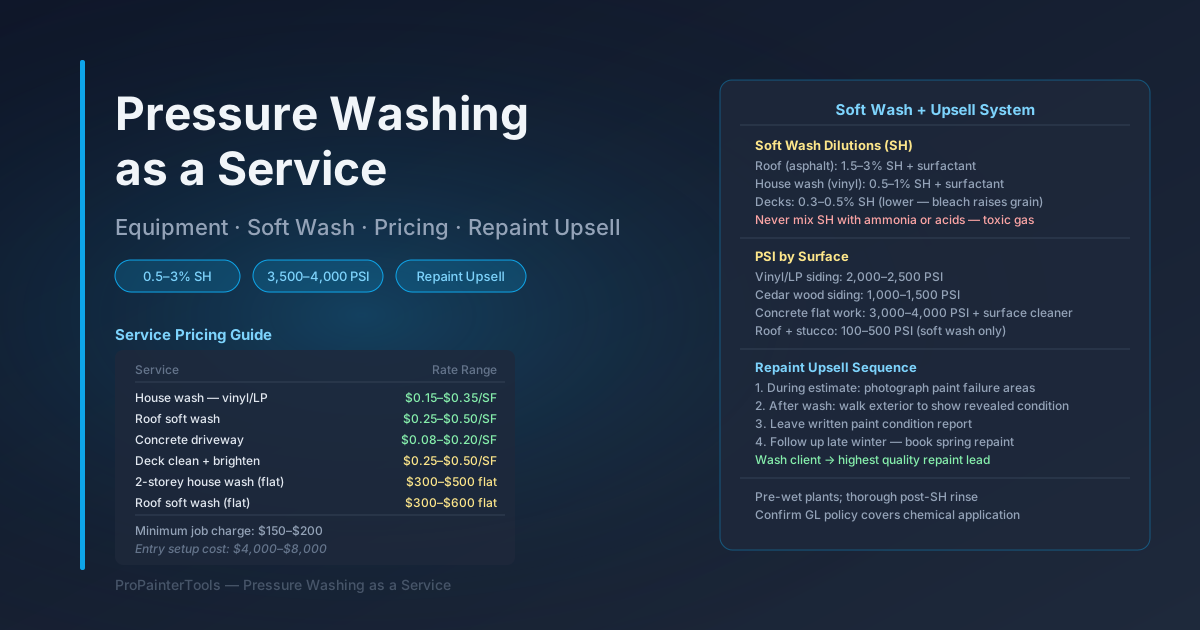
Pressure Washing as a Service: Equipment, Pricing, Soft Wash, and Upselling to Paint
Pressure washing is the most direct path to building a recurring revenue stream from residential clients. A client whose house is washed annually becomes a painting lead every 5–7 years. A client who books a roof soft wash becomes a client who knows your business, trusts your crew, and responds to your upsell sequence. For a painting contractor already operating trailer-mounted equipment and managing exterior cleaning for job preparation, offering standalone washing services requires minimal additional investment and produces high-margin work in the shoulder season between busy painting periods. This guide covers the operational and commercial structure of pressure washing as a service line.
Equipment Sizing
Cold Water vs Hot Water Units
Cold water pressure washers: The most common commercial units. Effective for most residential and light commercial exterior cleaning — driveways, siding, decks, fences. Cold water is not effective for removing oil, grease, and heavy biological contamination without chemical assistance.
Hot water pressure washers: Generate water temperatures of 60–85°C, which dramatically accelerates the breakdown of oils, grease, and biological contamination. Required for commercial kitchen exterior cleaning, vehicle fleet washing, and heavily soiled concrete. Hot water units are 2–3× the cost of cold water units and heavier to transport. For residential exterior cleaning, cold water with appropriate detergents achieves equivalent results at lower equipment cost.
PSI and GPM for Commercial Pressure Washing
PSI (pounds per square inch): The pressure rating. Higher PSI = more force per unit area. Too much PSI damages soft surfaces (cedar siding, painted wood, older brick, window frames).
GPM (gallons per minute): The flow rate. Higher GPM = more water volume for rinsing and for diluting chemical concentration. Cleaning power (CU) = PSI × GPM. For equal cleaning power, a 3,000 PSI / 4 GPM unit cleans as effectively as a 2,000 PSI / 6 GPM unit on the same surface type.
Commercial service sizing by application:
| Application | Recommended Spec |
|---|---|
| Residential house wash (vinyl, LP) | 2,000–2,500 PSI, 4–5 GPM cold |
| Concrete driveway/parking | 3,000–4,000 PSI, 4–5 GPM cold |
| Cedar and wood siding | 1,000–1,500 PSI, 4 GPM cold |
| Soft wash (roof, siding blend) | 100–500 PSI, 6–8 GPM low-pressure system |
| Commercial concrete flat work | 3,500–4,000 PSI, 5–8 GPM, surface cleaner attachment |
Surface cleaner attachment: A rotary surface cleaner (20–24" diameter) dramatically increases productivity on flat concrete — cleaning at 4–5× the speed of a standard wand on driveways and parking areas. A surface cleaner paid for in 2–3 concrete cleaning jobs by the time saved in labour.
Equipment Configuration
Entry level (residential focus): 3,500 PSI / 4 GPM cold water unit, trailer or truck-bed mounted. 300-foot hose reel. Surface cleaner. Chemical injection system (downstream, downstream injector for detergent application). Cost: $3,000–$6,000.
Full commercial: 4,000 PSI / 8 GPM hot water skid unit, trailer mounted with 500-gallon water tank (for sites without water access). 500-foot hose reel. Multiple surface cleaners and wands. Cost: $12,000–$30,000.
Soft Washing
Soft washing is a low-pressure cleaning method that uses chemical solutions rather than mechanical pressure to clean and sanitise surfaces. It is the correct method for surfaces that would be damaged by high-pressure washing: roofs (asphalt shingles), painted wood, stucco, and EIFS.
Sodium Hypochlorite (Bleach) as the Active Agent
Sodium hypochlorite (SH) — household bleach at 3–6% concentration, pool shock at 10–12.5% concentration — is the primary biocide in soft washing. It kills algae, mould, mildew, lichen, and bacteria on contact.
Working dilutions for soft wash:
| Application | SH Concentration (as applied) | Notes |
|---|---|---|
| Roof (asphalt shingles) | 1.5–3% SH | Effective on gloeocapsa magma (black streaks) |
| House wash (vinyl, LP siding) | 0.5–1% SH | Combined with surfactant |
| Decks and wood | 0.3–0.5% SH | Lower concentration — bleach can raise wood grain |
| Concrete | 0.5–1% SH + degreaser | For algae/mould removal; degreaser for oil stains |
| Stucco / EIFS | 0.5–1% SH | Very low pressure rinse after dwell |
Pool shock (sodium hypochlorite at 10–12.5%) is purchased in bulk (50-lb bags or 15-gallon drums) and diluted on-site. Cost is significantly lower than liquid bleach and produces less waste packaging.
Surfactant: Add a surfactant (non-ionic soap or commercial SH surfactant blend) to the soft wash mix. Surfactant extends the dwell time of SH on vertical surfaces, reduces water surface tension for better penetration into biofilm, and improves rinsing. Typical ratio: 1–3 oz surfactant per gallon of SH solution.
Soft Wash Application Equipment
Soft wash is applied at 100–500 PSI through a dedicated soft wash system (pump, tank, nozzles) or through a 12V pump system. Do not use a standard pressure washer downstream injector for soft washing — the high-flow PSI of a pressure washer damages soft surfaces and dilutes the SH solution too much. Dedicated soft wash pumps (12V, 5.5 GPM) apply undiluted chemical solution at very low pressure.
Safety for sodium hypochlorite:
- SH is corrosive — PPE required: chemical splash goggles, chemical-resistant gloves, apron
- Neutralise SH on plants and grass before and after application with water (pre-wet, during application, and rinse thoroughly after)
- Never mix SH with ammonia, acids, or other cleaners — toxic chlorine gas is produced
- Store SH in cool, dark location — degrades rapidly in heat and UV; purchase fresh product for each job season
Pricing Models
Per-square-foot pricing: The simplest model for house washing and flat-work. Measure the exterior wall area or concrete area and price per SF.
| Service | Market rate (per SF) |
|---|---|
| House wash — vinyl/LP siding | $0.15–$0.35/SF |
| Roof soft wash | $0.25–$0.50/SF of roof surface |
| Concrete driveway | $0.08–$0.20/SF |
| Deck cleaning | $0.25–$0.50/SF |
Flat by job type: Many washing contractors use flat pricing by job type for residential:
| Service | Flat rate range |
|---|---|
| Single-storey house wash | $200–$350 |
| Two-storey house wash | $300–$500 |
| Standard 2-car driveway | $100–$200 |
| Roof soft wash (average house) | $300–$600 |
| Deck clean + brighten | $150–$400 |
Minimum job size: Set a minimum job charge ($150–$200) to ensure equipment mobilisation is covered on small jobs.
Commercial pricing: Commercial flat work (parking lots, loading docks, commercial facades) is priced per SF with a minimum that accounts for the larger equipment and longer setup. Commercial accounts provide consistency and volume but often have 30-day payment terms.
The Upsell Sequence from Wash to Repaint
A pressure washing client is the highest-quality painting lead because they have already hired you, seen your crew work, and have a clean exterior surface that reveals the paint condition clearly.
The conversion sequence:
- Before the job: During the estimate walk, note and photograph any obvious paint failure — chalking, peeling, blistering, fading. Mention it casually: "We'll clean this up today, and I'll note some areas of paint failure I'm seeing — I'll include those in the report after the job."
- After the wash: The clean surface reveals paint condition that dirty, algae-covered siding conceals. Walk the exterior with the client after the wash and show them: "Now that it's clean, you can see where the paint is beginning to chalk along the south side and the windowsills are starting to peel. That's normal for paint at this age — I can put together an exterior repaint quote if you'd like to plan for next spring."
- Leave a report: A written summary (even a one-page email) documenting the paint condition — areas of failure, approximate coverage, condition rating — positions you as the expert and creates a record the client can refer back to.
- Follow up: Contact clients who received a paint condition report in late winter for the following season. "We washed your house last summer and noted the paint was beginning to chalk on the south elevation — we're booking exterior repaints for spring if you'd like to get on the schedule."
This sequence — wash, assess, report, follow up — builds a predictable pipeline of repaint leads from a client base that already knows you.
Safety and Liability
Roof walking: Roof soft washing does not require walking on the roof if a low-pressure pump system with adequate reach is used from the ground or ladder. If roof access is required, appropriate fall protection (harness, anchor, rope grab) is mandatory regardless of pitch. Do not walk a wet roof.
Chemical liability: SH at working concentrations can damage plants, stain concrete, and irritate skin. Protect client landscaping with pre-wetting and thorough rinsing. Document your chemical application method and the protections you applied.
Client property liability: High-pressure water at inappropriate PSI can etch concrete, strip paint prematurely, damage window seals, and blow water into wall assemblies through gaps in flashing. Know your PSI limits by surface. When in doubt, lower pressure and chemical assist — never increase PSI to compensate for inadequate dwell time.
Insurance: Confirm that your GL policy covers pressure washing services. Some policies exclude chemical application or require a separate endorsement for exterior cleaning. See our painting business insurance guide.
For the surface preparation washing techniques used in painting job prep — PSI selection by substrate, nozzle selection, and drying requirements before coating — see our pressure washing guide. For pricing and estimating standalone service lines, see our estimating painting jobs guide.
ProPainterTools generates quotes for pressure washing jobs with the same line-item structure as painting estimates — keeping your service pricing consistent and professional across both service lines.
Frequently Asked Questions
How much does it cost to start a pressure washing service line? An entry-level setup — 3,500 PSI cold water unit, surface cleaner, chemical injection, hose reel, and basic soft wash pump — runs $4,000–$8,000. Trailer or truck-bed mounting adds $1,000–$3,000 depending on configuration. For a painting contractor already owning a truck and trailer, the incremental equipment cost is the primary investment.
Is pressure washing a year-round service? In most US climates, exterior pressure washing is seasonal — spring through autumn. Cold weather freezes equipment and inhibits chemical effectiveness. Some contractors offer interior floor cleaning, commercial kitchen equipment washing, or fleet washing during winter months to extend the season.
How do I prevent SH from killing the client's plants? Pre-wet all landscaping thoroughly before applying SH. During application, avoid direct spraying of SH onto plant foliage — apply to the surface being cleaned, not plants. After application, rinse all surrounding plant material with fresh water immediately. Landscaping planted directly against the foundation or siding that will receive SH should be covered with plastic sheeting during application.
What is the difference between pressure washing and power washing? The terms are used interchangeably in most markets. Technically, "power washing" sometimes refers to hot water units specifically (the "power" of heated water), while "pressure washing" covers both hot and cold units. For marketing and client communication, the distinction does not matter — use whatever term is most common in your local market.
