Surface Preparation Standards Guide — SSPC, AMPP & PCA Requirements
3 February 2026 · ProPainterTools
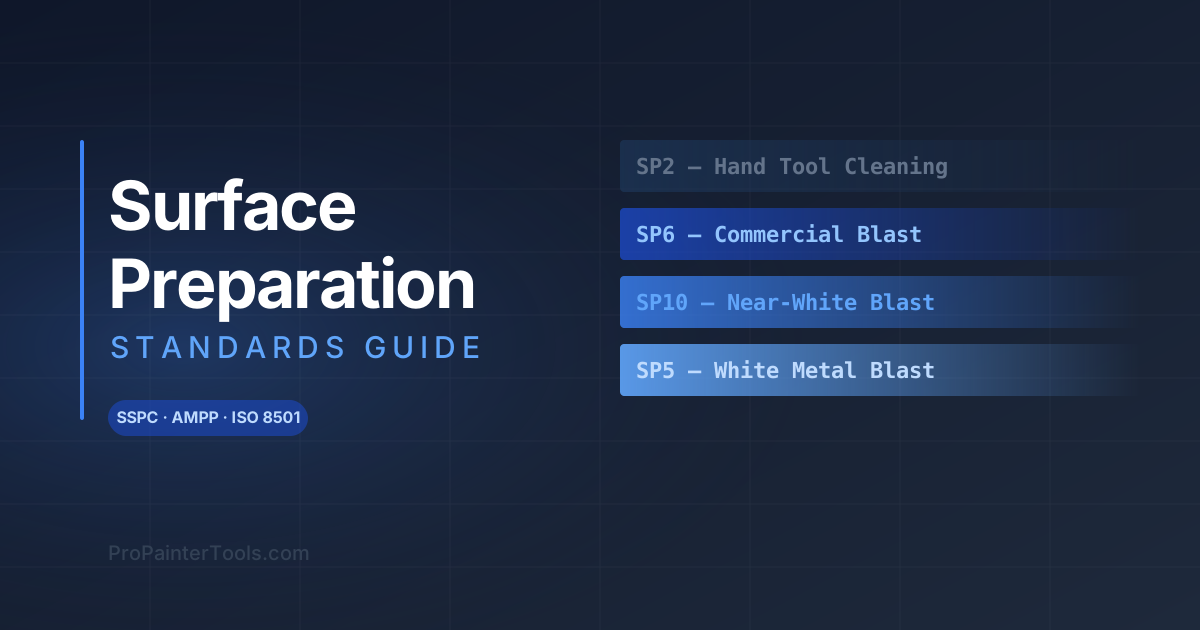
Surface Preparation Standards Every Professional Painter Must Know
Surface preparation standards are the backbone of every successful coating application. Get the prep wrong and it doesn't matter how good your paint is — adhesion fails, corrosion creeps under the film, and callbacks follow. This guide covers the SSPC/AMPP surface preparation grades, their ISO 8501-1 equivalents, anchor profile requirements, and what PCA standards mean for painting contractors working on residential and commercial projects.
Why Surface Preparation Standards Exist
Coating failures are overwhelmingly caused by surface contamination, inadequate surface profile, or moisture — not the coating itself. The SSPC (Society for Protective Coatings), now merged with NACE International under the banner of AMPP (Association for Materials Protection and Performance), developed standardised surface preparation grades to remove ambiguity from coating specifications. When a project specification calls for SSPC-SP10, every contractor, inspector, and manufacturer knows exactly what cleanliness level is required before the first coat is applied.
These standards protect:
- Coating manufacturers — their warranty is voided if prep is inadequate
- Building owners — premature failure is expensive and disruptive
- Contractors — a written, inspectable standard protects you from disputes
SSPC/AMPP Surface Preparation Grades Explained
The SSPC-SP grades run from SP1 through SP16 and cover everything from basic solvent wiping to abrasive blasting. Here are the most commonly specified:
SP1 — Solvent Cleaning
Removes oil, grease, flux, and other soluble contaminants using solvents, emulsion cleaners, or steam. SP1 is always the first step before any other preparation method — you cannot blast or hand-tool a greasy surface and expect the result to be clean.
SP2 and SP3 — Hand Tool and Power Tool Cleaning
SP2 (Hand Tool Cleaning) uses wire brushes, scrapers, and sandpaper to remove loose mill scale, rust, and old paint. It achieves a dull metallic appearance but leaves tightly adhered material in place.
SP3 (Power Tool Cleaning) uses angle grinders, needle guns, or disc sanders to produce a cleaner surface than SP2. Neither grade is suitable for high-performance industrial coatings — they are appropriate for maintenance painting and lower-specification residential work.
SP6 — Commercial Blast Cleaning
At least two-thirds of each square inch of surface must be free of all visible residues. Mill scale, rust, and old coatings are removed from most of the area; stains may remain in pits and crevices. SP6 is the minimum for many zinc-rich primers and general industrial coatings.
SP10 — Near-White Metal Blast Cleaning
One of the most commonly specified grades for high-performance industrial work. At least 95% of the surface is free of all visible residues. Only light staining in pits is permitted. SSPC-SP10 is the required standard for most two-pack epoxy and polyurethane coating systems on structural steel, tanks, and bridges.
SP11 — Power Tool Cleaning to Bare Metal
Achieves bare metal cleanliness using power tools alone — no blasting equipment required. Critically, SP11 also requires a minimum surface profile of 1 mil (25 microns), making it a viable alternative to abrasive blasting in confined spaces or areas where blasting is prohibited.
SP13 — Surface Preparation for Concrete
The concrete equivalent of the metal standards. SP13 addresses the removal of laitance, curing compounds, sealers, and contamination from concrete prior to coating. Methods include acid etching, shot blasting, scarifying, and grinding. The degree of preparation required depends on the coating system and the exposure environment.
Anchor Profile: Why Surface Texture Determines Adhesion
An anchor profile (also called surface profile or anchor pattern) is the microscopic peaks and valleys created on a metal surface by abrasive blasting. Measured in mils (thousandths of an inch) or microns, the profile creates mechanical interlocking between the coating and the substrate.
Typical anchor profile requirements:
| Coating System | Recommended Profile |
|---|---|
| Alkyd / oil-based primers | 1.0 – 2.0 mils |
| Zinc-rich primers | 2.0 – 3.0 mils |
| High-build epoxy (>5 mils DFT) | 2.5 – 4.0 mils |
| Thermal spray coatings | 3.0 – 4.5 mils |
Profile is measured using replica tape (Testex Press-O-Film) and a spring micrometer, or with digital surface profilometers. Always verify the profile requirement in the coating manufacturer's data sheet — a profile that is too deep can cause pinholing at the peaks when the coating bridges across valleys.
ISO 8501-1: The International Standard Equivalent
ISO 8501-1 is the European equivalent of the SSPC-SP grades and uses a different notation system. Knowing both is essential when working on international projects or when manufacturer data sheets reference ISO grades:
| ISO 8501-1 Grade | SSPC Equivalent | Description |
|---|---|---|
| Sa 1 | SP7 (Brush-Off Blast) | Light blasting — loose material removed |
| Sa 2 | SP6 (Commercial Blast) | Thorough blasting — most contamination removed |
| Sa 2½ | SP10 (Near-White Blast) | Very thorough blasting — 95% clean |
| Sa 3 | SP5 (White Metal Blast) | 100% clean — all residues removed |
| St 2 | SP2 (Hand Tool) | Hand tool cleaning |
| St 3 | SP3 (Power Tool) | Power tool cleaning |
PCA Standards for Painting Contractors
The Painting Contractors Association (PCA) publishes a separate set of standards (P1–P25) specifically oriented toward commercial and residential painting contractors rather than industrial coatings. Key documents include:
- PCA P1 — General painting specification covering surface preparation, application conditions, and material requirements for architectural coatings
- PCA P10 — Production rates and labour standards for estimating, widely used as the industry benchmark for bidding accuracy
- PCA P12 — Cabinet and millwork finishing specifications
- PCA P21 — Exterior wood finishing standards
For residential and commercial painting contractors, PCA standards are the practical day-to-day reference. For industrial, marine, and infrastructure projects, SSPC/AMPP grades take precedence.
Choosing the Right Preparation Standard
The correct preparation grade is determined by three factors:
- The coating system being applied — the manufacturer's data sheet specifies the minimum surface preparation required to maintain warranty
- The environment the coating will face — more aggressive exposure (marine, chemical, high humidity) demands higher preparation grades
- The substrate condition — heavily corroded steel or concrete with significant laitance requires more aggressive preparation than well-maintained surfaces
A common mistake is selecting a preparation grade based on what is convenient rather than what the coating requires. Applying a high-performance two-pack epoxy over SP3 power-tool-cleaned steel is money wasted — the coating will delaminate long before its expected service life.
Before starting any substrate preparation, always check for lead-containing paint — see our EPA Lead-Safe RRP compliance guide for the rules that apply to renovation work on pre-1978 buildings.
Moisture is equally critical. Even a perfectly blasted surface will cause adhesion failure if the substrate is wet or the relative humidity exceeds coating application limits. Our guide to moisture testing for wood and concrete covers the methods and thresholds painters need to know. Before committing to a coating system over unknown existing paint, run an adhesion test — a cross-hatch or pull-off test takes minutes and prevents costly callbacks. When washing is the first prep step, our pressure washing guide covers PSI by substrate, nozzle selection, and dry time requirements.
Accurate Prep Estimates Start With the Right Tools
Surface preparation is typically the most labour-intensive and expensive part of any coating project. Accurately estimating your prep hours — and recovering that cost in your bid — is essential to running a profitable operation. ProPainterTools gives painting contractors a purpose-built platform to calculate material quantities, log labour hours by surface type, and generate professional invoices — so the numbers on your estimate match the numbers in your bank account.
Frequently Asked Questions
What is the most commonly specified surface preparation standard? SSPC-SP10 (Near-White Metal Blast) is the most frequently specified grade for industrial and commercial steel coating projects due to its balance of performance and cost.
Do residential painters need to follow SSPC standards? Not usually. Residential painters generally work to PCA standards or manufacturer requirements. SSPC grades become relevant when working on structural steel, infrastructure, or industrial facilities.
How is surface profile verified on site? Using Testex replica tape pressed onto the blasted surface, then measured with a micrometer. Digital profilometers are also widely used and provide immediate readings.
What happens if I apply coating over inadequate surface preparation? Premature adhesion failure, delamination, blistering, or corrosion under the film. The coating manufacturer's warranty is voided, and the contractor typically bears the cost of rework.
For further reference, visit the AMPP official standards library for the full text of SSPC/AMPP surface preparation standards.
